

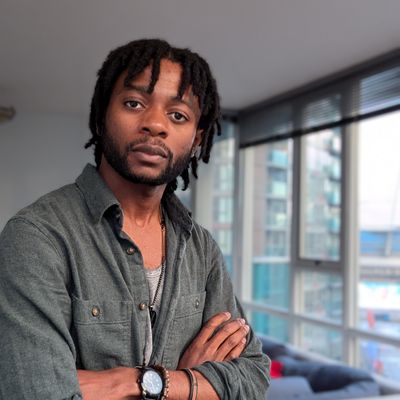
I’m David. I grew up in Bungoma, a small town in western Kenya. By the time I was fifteen I had moved to Nairobi for high school. By eighteen I was in Johannesburg. By twenty-three I was at a tiny mountain university in Squamish, British Columbia, where it rained sideways for eight months a year and the nearest city was an hour’s drive through cliffs and ocean.
Each move stripped something away. Assumptions I didn’t know I had. Comfort zones I didn’t know I was standing in. And each one replaced it with a question I’m still trying to answer.
what each place taught me
Bungoma taught me that brilliance doesn’t need resources — it needs room. I watched people solve hard problems with almost nothing, and I carry that instinct into everything I build. If the solution requires a lot of machinery to work, it probably isn’t the right solution yet.
Nairobi taught me pace. Alliance High School was competitive in a way I wasn’t prepared for, and it showed me that working hard isn’t the same thing as working well. The people who thrived weren’t the ones who studied the most hours — they were the ones who knew what to ignore.
Johannesburg taught me range. The African Leadership Academy put me in rooms with people from thirty countries who thought about the same problems completely differently. That’s where I first understood that the most important skill isn’t expertise — it’s the ability to hold two opposing ideas in your head and still function. Economics and physics. Strategy and empathy. Structure and freedom.
Squamish taught me depth. Quest University had no departments, no majors — you designed your own concentration and defended it. Mine was computer science with an AI focus. But the real education was learning to sit with a hard problem for months, not days. To let it change shape in your mind until the answer stops being forced.
Vancouver is where it all converges. This is where I’m building, and where I’m learning that building something meaningful takes longer than you think and costs more than you planned. And that both of those things are fine.
the question i keep coming back to
Here’s the thing I can’t stop thinking about: every system you use today — every app, every platform, every service — asks you to trust it. Trust that your data stays yours. Trust that the rules are fair. Trust that what you’re being told is actually what’s happening.
And maybe that’s fine for casual things. But for the systems that matter — the ones that hold your identity, your work, your money, your creative output — “trust me” is not good enough. It has never been good enough. We’ve just been pretending otherwise because we didn’t have an alternative.
That’s what Syncropic is about. Not governance as a feature. Not privacy as a policy. But trust as a property of the system itself — something the mathematics proves, every time, without requiring anyone to behave honestly. I wrote more about this here, if you want to go deeper.
I first felt this problem at Snowstorm Technologies, where I work as a data scientist. Coordinating across booking systems, payment providers, and distribution networks, I kept noticing the same thing: the actual work was simple, but making systems talk to each other cost more than the work itself. The wiring was always more expensive than the house. That friction is the problem I’m trying to solve — not just for travel, but for everything.
on music
I DJ. Deep house, afro house, melodic techno — whatever the room needs. And I’ve learned more about building software from DJing than from any textbook.
A good set is a negotiation. Between what you want to play and what the room can absorb. Between structure and surprise. Between the track that’s technically right and the one that feels right. Every transition is a tiny decision about how much tension the moment can hold. Too safe and people drift. Too aggressive and you lose them.
Building products is the same thing. You’re reading the room. You’re making decisions the user can’t articulate but will feel. And the craft is knowing when to follow the energy and when to redirect it.
That’s partly why I built CatchMyVibe — because the hardest part of DJing isn’t the mixing. It’s the selection. You have thousands of tracks, and the knowledge of what fits together lives entirely in your head. I wanted to externalize that intuition. Let the library learn your taste instead of relying on your memory.
on teaching & learning
I’ve been a student my whole life, and a tutor for most of it. At Quest I spent years helping other students with quantitative reasoning, and I noticed something: personalized learning works — the research is overwhelming on this — but it’s expensive and complex, which means most students never see it. So I built a recommendation system that maps what a student doesn’t know and surfaces the materials that fill exactly that gap. The technology exists. The question is access.
Teaching taught me that the best explanation isn’t the most complete one — it’s the one that meets someone exactly where they are. I think about that when building products too. Software should meet people where they are, not where the designer thinks they should be.
what i’m still learning
Patience. Not the passive kind — the active kind. The patience to let something be unfinished long enough for it to become right, instead of forcing it into shape because the uncertainty is uncomfortable.
When to stop building and start shipping. When to stop planning and start doing. When to stop talking and start listening. These sound obvious, but the timing is everything, and I get it wrong more often than I’d like to admit.
That the world doesn’t owe you understanding. That your idea being good is not sufficient for it to succeed. That the gap between vision and execution is where most things die — and that crossing it requires a kind of stubbornness that looks irrational from the outside but feels necessary from the inside.
an invitation
If any of this resonates — the questions, the restlessness, the belief that we can build things that are both ambitious and honest — I’d genuinely love to hear from you. I’m not hard to find: dp.wanjala@gmail.com, or anywhere on the internet under dpwanjala.
Thanks for reading this far. It means more than you think.
— dp
Last updated March 2026 · Vancouver